Choosing the right cement is one of the most important decisions when building a house. Cement plays a key role in the strength, durability, and quality of concrete and mortar used in foundations, columns, beams, slabs, brickwork, and plastering.
However, with different cement grades and types available in the market, many homeowners wonder: Which cement grade is best for house construction — 33, 43, or 53 grade?
The right choice depends on the structural requirements, type of construction work, concrete mix design, and recommendations from your structural engineer. In this guide, we explain the differences between cement grades, their applications, and how to choose the right cement for your dream home.
https://youtube.com/@divinehouseofficial?si=jRtAqIuH0LOI4BRc
What Is Cement Grade?
Cement grade indicates the strength classification associated with a cement product under the relevant Indian Standard. For Ordinary Portland Cement (OPC), the commonly discussed grades are 33 grade, 43 grade, and 53 grade.
The number refers to the minimum compressive strength, in megapascals (MPa), achieved by standard cement mortar specimens at 28 days under the applicable testing standard. It does not mean that concrete made with that cement will automatically achieve the same strength.
Concrete strength also depends on factors such as the water-cement ratio, aggregate quality, mix proportions, compaction, and curing.
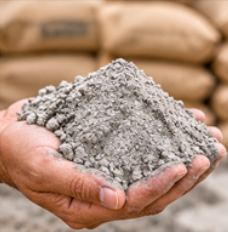
Types of Cement Grades Used in House Construction
1. 33 Grade Cement
33 grade OPC is associated with a minimum 28-day compressive strength of 33 MPa under the applicable standard.
Typical considerations:
- May be suitable for certain general construction applications where the specification permits it.
- Has a lower strength classification than 43 and 53 grade OPC.
- Availability and suitability should be checked against current standards and project requirements.
For new residential construction, homeowners should not select 33 grade cement simply because it may be cheaper. Confirm whether it is appropriate for the intended work and complies with the relevant specification.
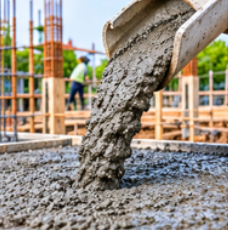
2. 43 Grade Cement
43 grade OPC is associated with a minimum 28-day compressive strength of 43 MPa under the applicable standard.
Typical considerations:
- Has traditionally been used in general construction and concrete work.
- May be suitable for various residential applications when specified by the engineer.
- Can be used for concrete and other applications only when the product, mix design, and project specifications are appropriate.
The actual performance of concrete depends on the complete mix and construction process, not the cement grade alone.

3. 53 Grade Cement
53 grade OPC is associated with a minimum 28-day compressive strength of 53 MPa under the applicable standard.
Typical considerations:
- Often considered for structural concrete where the design and specifications permit it.
- Can be useful where higher early strength development is required, depending on the product and curing conditions.
- Requires proper mix proportioning, placing, compaction, and curing.
Important: 53 grade cement does not automatically make a building stronger or safer than one constructed using 43 grade cement. The concrete mix must be designed to achieve the specified strength and durability.
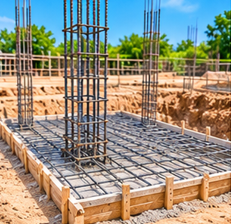
43 Grade vs 53 Grade Cement: Key Differences
| Feature | 43 Grade OPC | 53 Grade OPC |
|---|---|---|
| Minimum 28-day strength classification | 43 MPa | 53 MPa |
| Common consideration | General construction where specified | Structural concrete where specified |
| Early strength development | Depends on the product and conditions | Often develops strength faster, but product-specific |
| Concrete performance | Depends on mix design and workmanship | Depends on mix design and workmanship |
| Best choice | As specified for the work | As specified for the work |
These figures refer to cement strength classification under the relevant standard, not the compressive strength of finished concrete.
Which Cement Grade Is Best for Different Parts of a House?
There is no single cement grade that is automatically best for every part of a house. Selection should follow the structural design, applicable standards, and product specifications.
1. Foundation and Footings
Foundations transfer the loads of the building to the soil. Cement selection for footing concrete should consider the specified concrete grade, soil and groundwater conditions, exposure, and durability requirements.
Use the cement type and concrete mix specified by the structural engineer. Do not select cement based on grade alone.
2. Columns and Beams
Columns and beams are important load-bearing structural elements. Their concrete must achieve the strength and durability specified in the structural design.
43 grade or 53 grade OPC may be considered where permitted by the specification, but the cement grade alone does not determine the final concrete strength. Mix design, reinforcement detailing, workmanship, and curing are equally important.
3. Roof Slabs
Roof slabs require concrete that meets the specified strength and durability requirements.
Before choosing cement, confirm the required concrete grade and the mix design. Correct water measurement, proper compaction, and adequate curing are essential for slab quality.
4. Brickwork and Blockwork
Masonry mortar has different requirements from structural concrete. Cement selection should suit the masonry units, mortar specification, and required workability.
A higher cement grade is not automatically necessary for every masonry application. Follow the specified mortar mix and avoid adding excess cement without technical justification.
5. Plastering
Plastering requires a workable mortar that provides a suitable finish and bond to the surface.
The appropriate cement product and mortar proportions depend on the plaster specification, surface condition, and exposure. Excessively rich mortar or poor curing can contribute to shrinkage cracking.
OPC vs PPC vs PSC: Which Cement Type Should You Choose?
Cement grade and cement type are different. While grade describes a strength classification for a specific cement product, type refers to its composition and properties.
Three commonly encountered options in India are:
Ordinary Portland Cement (OPC)
OPC is available in grades such as 43 and 53, subject to the applicable product standard.
- Used in many concrete and construction applications.
- May be selected where its strength development and properties meet project requirements.
- Product characteristics and curing requirements should be considered.
Portland Pozzolana Cement (PPC)
PPC contains pozzolanic material as specified by the applicable standard.
- Commonly used in residential construction.
- Can provide beneficial long-term performance when properly proportioned and cured.
- May develop early strength differently from OPC, depending on the product and conditions.
Portland Slag Cement (PSC)
PSC contains granulated blast-furnace slag in accordance with the relevant standard.
- Can be suitable for concrete exposed to certain aggressive environments.
- May offer durability benefits when properly specified and used.
- Its suitability depends on exposure conditions, mix design, and project requirements.
Which is best? OPC, PPC, and PSC can all be suitable for particular applications. The right selection depends on the structural design, exposure conditions, product compliance, construction schedule, and engineer’s recommendation.
7 Factors to Consider Before Buying Cement
1. Check the required concrete grade
Ask your engineer which concrete grade is specified for foundations, columns, beams, and slabs. Cement grade and concrete grade are not interchangeable.
2. Look for the applicable ISI marking
Check the packaging for the applicable Indian Standard, certification details, manufacturer information, and batch details. Verify that the product meets the relevant current specification.
3. Check the manufacturing date
Prefer fresh cement stored and supplied correctly. Cement can deteriorate when exposed to moisture or unsuitable storage conditions. Follow the manufacturer’s recommendations and site quality procedures.
4. Inspect packaging and condition
Avoid bags that are torn, wet, hardened, or visibly damaged. Cement should be stored in a dry, protected location and kept off the ground.
5. Consider environmental exposure
Buildings exposed to moisture, groundwater, coastal conditions, or aggressive soil may need specific durability measures and cement selection. Consult the engineer rather than choosing by grade alone.
6. Use a suitable mix design
Concrete performance depends on cement, water, aggregates, admixtures, mix proportions, and workmanship. A suitable mix design is essential for achieving the required strength and durability.
7. Follow proper curing practices
Curing helps concrete develop its intended properties. Even good-quality cement cannot compensate for poor compaction, excessive mixing water, or inadequate curing.
Common Mistakes to Avoid When Choosing Cement
Homeowners should avoid these common mistakes during construction:
- Choosing only by price: The cheapest cement may not be suitable for the specified work.
- Assuming higher grade always means better construction: Cement grade alone does not determine the performance of finished concrete.
- Confusing cement grade with concrete grade: OPC 53 grade is not the same as M53 concrete.
- Using one product without checking the application: Cement type and properties should match the project specification.
- Adding excess water: Too much water can reduce concrete strength and durability.
- Ignoring storage conditions: Moisture exposure can cause cement to deteriorate.
- Neglecting curing: Proper curing is important for concrete and mortar performance.
- Changing materials without approval: Any substitution should be checked against the design and approved by the responsible professional.
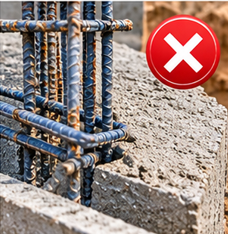
Tips for Getting the Best Results from Cement
To help achieve quality construction, follow these practices:
- Buy cement from a reliable supplier and verify product compliance.
- Check bags for damage, moisture, and hardened lumps.
- Store cement in a dry, covered location.
- Use the mix proportions and concrete grade specified for the work.
- Measure water carefully and avoid adding water without control.
- Ensure concrete is placed and compacted properly.
- Follow the specified curing procedure.
- Seek professional guidance before changing cement type or grade.
Conclusion
So, which cement grade is best for house construction? 43 grade and 53 grade OPC can both be suitable for residential construction when selected according to the project specifications. PPC and PSC may also be appropriate for many residential applications, depending on their properties and the construction requirements.
The best choice is not simply the cement with the highest number. It is the cement that meets the relevant standards and suits the concrete mix, structural design, exposure conditions, and construction process.
Frequently Asked Questions
1. Which cement grade is best for house construction?
There is no single best grade for every application. 43 grade or 53 grade OPC may be suitable depending on the structural specification, while PPC and PSC can also be appropriate for many residential projects.
2. Is 53 grade cement always better than 43 grade cement?
No. 53 grade OPC has a higher cement strength classification, but finished concrete performance depends on the mix design, materials, workmanship, and curing.
3. Can 43 grade cement be used for house construction?
Yes, where it meets the applicable product requirements and is permitted by the project specification. The structural engineer should confirm its suitability for the intended work.
4. Can 53 grade cement be used for foundations and slabs?
It may be used when the cement product, concrete mix design, and project specifications permit it. The required concrete grade and durability provisions must still be satisfied.
5. What is the difference between cement grade and concrete grade?
Cement grade describes the strength classification of cement under its relevant standard. Concrete grade, such as M20 or M25, specifies the characteristic compressive strength of concrete at 28 days under the applicable standard.
6. Is PPC cement suitable for house construction?
PPC is commonly used in residential construction and can offer useful long-term performance when properly specified, placed, and cured.
7. Which is better for plastering: 43 grade or 53 grade cement?
The appropriate choice depends on the plaster specification and product suitability. Higher cement grade is not automatically necessary; mortar proportions, workability, surface preparation, and curing are important.
8. How can I identify good-quality cement?
Check the relevant standard and certification marking, manufacturer and batch details, packaging condition, and storage history. For critical work, follow the project’s material inspection and testing procedures.
9. Does cement grade affect construction cost?
It can affect material cost, but the overall construction cost also depends on mix design, quantity, workability, construction methods, and quality control. Choose according to performance requirements rather than price alone.
10. Can different cement brands be mixed on-site?
Avoid mixing products casually. Different products can have different compositions and properties. Follow the engineer’s and manufacturer’s recommendations and obtain approval before changing or combining cement products.