Introduction
The monsoon season is one of the most challenging times for any home. While rain brings relief from the summer heat, it also puts every aspect of a building to the test. Heavy downpours, high humidity, and continuous exposure to moisture can reveal hidden construction defects, causing leaks, damp walls, roof seepage, cracks, and foundation issues.
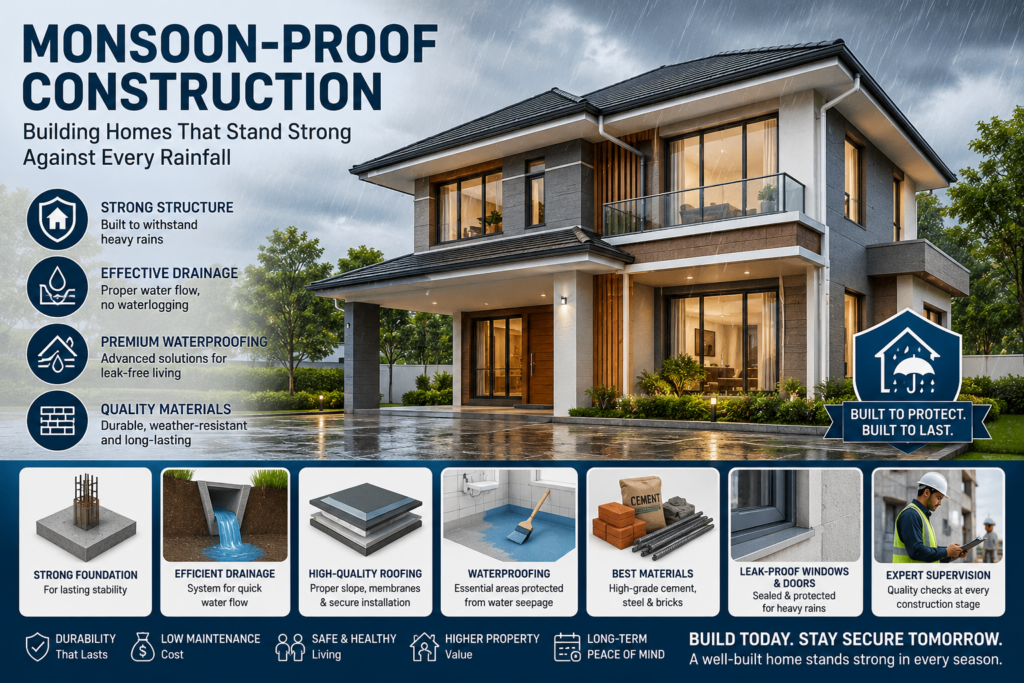
A well-constructed home is not just about attractive architecture—it is about strength, durability, and long-term protection. Monsoon-proof construction begins with proper planning, quality materials, and skilled workmanship. By following the right construction practices from the foundation to the roof, homeowners can enjoy a safe, comfortable, and maintenance-free living space, regardless of the weather.
Why Monsoon-Proof Construction Is Essential
Rainwater can gradually weaken a building if preventive measures are not taken during construction. Water entering through roofs, walls, or foundations can damage interiors, electrical systems, wooden furniture, and even compromise the structural integrity of the building over time.
A home designed to withstand monsoon conditions offers:
- Better structural strength and stability
- Reduced maintenance and repair costs
- Protection against water seepage and dampness
- Improved indoor air quality by preventing mold and mildew
- Higher property value and longer building lifespan
Investing in quality construction today helps homeowners avoid expensive repairs in the future.
Key Construction Practices During Monsoon
1. Strong Foundation Planning
Every durable home starts with a strong foundation. Before construction begins, professional builders conduct detailed soil testing to understand the soil’s strength, drainage capacity, and moisture levels. Based on these findings, engineers design a foundation that can safely support the structure even during heavy rainfall.
Proper excavation, foundation waterproofing, and high-quality concrete reduce the chances of settlement, soil erosion, and water infiltration. A strong foundation ensures the entire building remains stable for decades.
2. Efficient Site Drainage System
One of the biggest causes of structural damage during monsoon is poor drainage. Water that collects around the building can seep into the foundation, causing cracks, dampness, and weakening of the structure.
A professionally planned drainage system includes:
- Proper ground slope around the house
- Stormwater drains for quick water flow
- Rainwater harvesting systems
- Surface channels to divert excess rainwater
- Foundation drainage to prevent water accumulation
Effective drainage protects both the building and the surrounding landscape.
3. High-Quality Roofing System
The roof serves as the first line of defense against heavy rainfall. Poorly designed roofs often develop leaks, resulting in damaged ceilings and interiors.
A monsoon-resistant roof includes:
- Proper roof slope for quick water runoff
- High-quality waterproof membranes
- Durable roofing materials
- Secure flashing around chimneys and vents
- Well-installed gutters and downpipes
Regular roof inspections during construction ensure every joint and connection is properly sealed before the rainy season begins.
4. Premium Waterproofing Solutions
Waterproofing is one of the most important investments in any construction project. It protects the building from moisture penetration and significantly extends its lifespan.
Critical areas that require waterproofing include:
- Roof slabs
- Bathrooms and balconies
- External walls
- Basements
- Water tanks
- Terraces
Using advanced waterproof coatings, sealants, and protective membranes creates an effective barrier against water infiltration and prevents future leakage problems.
5. Weather-Resistant Construction Materials
The durability of a home depends greatly on the quality of materials used during construction.
Professional builders select:
- High-grade cement with superior bonding strength
- Quality concrete mixes for maximum durability
- Corrosion-resistant steel reinforcement
- Moisture-resistant bricks and blocks
- Weather-resistant exterior paints
- Crack-resistant plaster and finishes
These materials improve the home’s ability to withstand constant exposure to rain, humidity, and changing temperatures.
6. Proper Wall Protection
Exterior walls are constantly exposed to rain and moisture. Without proper treatment, water can penetrate the walls and lead to peeling paint, damp patches, fungal growth, and structural damage.
Protective measures include:
- Waterproof exterior plaster
- Weatherproof exterior paints
- Crack-resistant wall finishes
- Proper curing during construction
- Expansion joints where required
These solutions keep walls dry, attractive, and structurally sound.
7. Quality Window and Door Installation
Even a well-built home can experience water leakage if windows and doors are not properly installed.
Professional installation involves:
- High-quality weather seals
- Silicone joint sealing
- Correct frame alignment
- Proper sill design for water runoff
- Leak-proof installation techniques
This prevents rainwater from entering the interiors during heavy storms.
8. Continuous Expert Supervision
Construction quality depends not only on materials but also on execution. Experienced engineers and site supervisors ensure every stage of construction follows industry standards.
Regular inspections include:
- Checking concrete quality
- Monitoring curing processes
- Verifying waterproofing applications
- Inspecting reinforcement placement
- Ensuring proper drainage implementation
- Identifying and correcting defects immediately
Continuous supervision minimizes errors and ensures long-lasting construction quality.
Common Problems Caused by Poor Monsoon Construction
Ignoring proper construction practices can result in several costly issues, such as:
- Roof leakage
- Damp walls and ceilings
- Foundation settlement
- Mold and mildew growth
- Cracked plaster
- Waterlogging around the property
- Corrosion of steel reinforcement
- Damage to flooring and interiors
Many of these problems can be prevented by using the right construction techniques from the beginning.
Benefits of Choosing a Professional Construction Company
An experienced construction company understands how seasonal conditions affect building performance. From planning and material selection to execution and quality control, professionals ensure that every aspect of your home is designed to withstand heavy rainfall.
Professional construction offers:
- Better structural durability
- Reliable waterproofing solutions
- Compliance with engineering standards
- Reduced maintenance expenses
- Enhanced safety for your family
- Long-term value for your investment
A well-built home not only survives the monsoon but continues to perform efficiently for many years.
Frequently Asked Questions (FAQs)
1. Why is monsoon-proof construction important for a home?
Monsoon-proof construction protects your home from water seepage, dampness, roof leaks, foundation damage, and mold growth. It enhances the durability of the building, reduces maintenance costs, and ensures a safe and comfortable living environment during heavy rains.
2. What are the key features of a monsoon-resistant home?
A monsoon-resistant home includes a strong foundation, efficient drainage system, high-quality waterproofing, weather-resistant construction materials, properly designed roofing, protected exterior walls, and leak-proof windows and doors.
3. Which areas of a house require waterproofing?
The most important areas that require waterproofing are the roof, terraces, balconies, bathrooms, external walls, basements, foundations, and water tanks. Proper waterproofing in these areas helps prevent leaks and extends the life of the building.
4. How does proper drainage protect a building during the monsoon?
An effective drainage system prevents rainwater from accumulating around the foundation, reducing the risk of waterlogging, soil erosion, dampness, and structural damage. It also helps protect landscaping and outdoor spaces.
5. What construction materials are best for monsoon-proof homes?
High-grade cement, quality concrete, corrosion-resistant steel, moisture-resistant bricks or blocks, weatherproof exterior paints, and crack-resistant plaster are commonly used to improve a home’s resistance to heavy rainfall and humidity.
6. Can poor construction lead to long-term structural damage?
Yes. Poor construction practices can result in roof leaks, wall cracks, foundation settlement, corrosion of steel reinforcement, mold growth, and costly repairs. Investing in quality construction from the beginning helps prevent these issues.
7. How often should a home be inspected before or during the monsoon season?
It is recommended to inspect your home at least once before the monsoon begins. Checking the roof, gutters, waterproofing, drainage systems, windows, and exterior walls can help identify and fix potential problems before heavy rains arrive.
8. Does waterproofing eliminate all chances of leakage?
While professional waterproofing significantly reduces the risk of water leakage, its effectiveness depends on proper application, quality materials, and regular maintenance. Periodic inspections help ensure long-term protection.
9. What are the benefits of hiring a professional construction company for monsoon-proof construction?
Professional builders ensure proper planning, quality materials, expert workmanship, effective waterproofing, adherence to engineering standards, and continuous quality checks, resulting in a durable and weather-resistant home.
10. Is monsoon-proof construction more expensive than regular construction?
Although it may involve a slightly higher initial investment due to premium materials and waterproofing solutions, monsoon-proof construction saves money in the long run by reducing repair costs, maintenance expenses, and structural damage caused by water.
Conclusion
The monsoon season is a true test of a home’s construction quality. A house built with strong foundations, effective drainage, premium waterproofing, quality materials, and expert supervision remains safe, dry, and comfortable even during the heaviest rains.
Choosing professional construction practices today means fewer repairs, lower maintenance costs, and greater peace of mind in the future. Whether you’re planning a new home or beginning a construction project, investing in monsoon-proof construction ensures your dream home remains strong, secure, and beautiful through every rainfall for years to come.