When building a house, every stage of construction plays an important role in creating a strong, durable, and reliable structure. While foundations, columns, beams, and slabs receive much of the attention, one essential material used during the early stages of construction is PCC (Plain Cement Concrete).
PCC is commonly used to create a clean, level, and stable base before foundation work and other construction activities begin. It helps prepare the ground for subsequent work and supports proper execution of the construction process.
Whether you are planning to build your dream home or learning about construction materials, understanding PCC can help you make better decisions during your building journey.
In this blog, Divine House explains what PCC is, its uses, benefits, types, and importance in residential construction.
https://youtube.com/@divinehouseofficial?si=jRtAqIuH0LOI4BRc
1. What Is PCC in Construction?
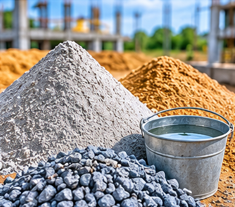
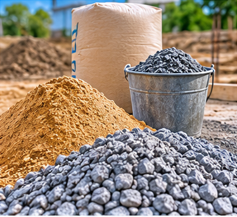
PCC stands for Plain Cement Concrete. It is a type of concrete made using cement, fine aggregate (usually sand), coarse aggregate, and water in specified proportions.
Unlike Reinforced Cement Concrete (RCC), PCC generally does not contain reinforcing steel bars. It is primarily used where concrete is required for a base, levelling layer, or other applications that do not require conventional steel reinforcement.
PCC is widely used in residential, commercial, and infrastructure projects because it provides a practical surface for carrying out subsequent construction activities.
Materials Used in PCC
The main materials used to prepare PCC include:
- Cement: Acts as the binding material.
- Fine aggregate: Usually sand, which fills smaller gaps between aggregate particles.
- Coarse aggregate: Provides bulk and contributes to the concrete’s strength.
- Water: Initiates the cement hydration process and makes the mix workable.
The proportions and quality of these materials should follow the project specifications and the requirements established by the responsible construction professional.
2. What Is the Purpose of PCC in House Construction?
PCC is particularly important during the initial stages of house construction. It is commonly placed over prepared ground before foundation-related work proceeds.
Its main purposes include:
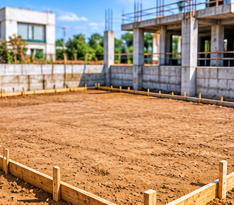
- Creating a clean working surface over prepared soil.
- Providing a level base for subsequent construction activities.
- Reducing direct contact between foundation concrete and the underlying soil.
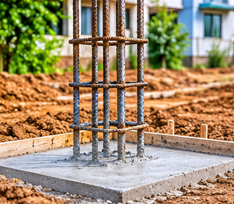
- Helping maintain the required position and cover arrangements for reinforcement during subsequent work, where applicable.
- Supporting accurate setting out and execution of foundation work.
Important: PCC is not a substitute for a properly designed foundation. The foundation system must be designed according to soil conditions, building loads, structural requirements, and applicable engineering standards.
3. Uses of PCC in Construction
PCC has several applications depending on the design and requirements of a project.
A. PCC Below Foundations
One of the most common applications is placing PCC below isolated footings, strip foundations, or other foundation elements when specified in the design.
This layer provides a clean and reasonably level surface for marking foundation dimensions and carrying out reinforcement and shuttering work.
It also helps separate the foundation work area from the prepared ground.
B. PCC Below Floor Construction
PCC may be used as a base or levelling layer below certain floor systems, depending on the floor design and ground conditions.
It can provide a more uniform surface for subsequent layers, such as flooring bases or other specified construction materials.
C. Levelling Uneven Surfaces
When a suitable concrete base is required to achieve a specified level, PCC may be used as a levelling layer.
However, the ground must be properly assessed and prepared. PCC should not be used to conceal unstable soil or unresolved settlement problems.
D. Pathways and External Areas
PCC may be used in certain pathways, utility areas, and external works where the design and expected loading permit its use.
The thickness, concrete grade, jointing, and base preparation should be appropriate for the intended application.
E. Blinding Concrete
PCC is often used as blinding concrete, which is a relatively thin layer placed over prepared ground to provide a clean surface before structural concrete work.
Blinding concrete is especially useful where construction requires accurate marking, reinforcement placement, or a cleaner working environment.
4. What Are the Benefits of PCC?
PCC offers several practical benefits when properly specified and installed.
1. Provides a Clean Working Surface
Prepared soil can be uneven or contain loose particles. PCC creates a cleaner surface for carrying out subsequent construction activities.
2. Improves Levelling
PCC can provide a more uniform base, making it easier to mark dimensions and position construction components accurately.
3. Supports Foundation Work
A suitable PCC layer can help facilitate foundation construction by providing a stable working platform for reinforcement placement and other activities.
4. Helps Reduce Soil Contamination of Structural Concrete
When correctly placed, PCC can help prevent the underlying soil from mixing directly with the structural concrete placed above it.
5. Supports Better Workmanship
A defined concrete base can make it easier for workers to carry out measurements, positioning, and related construction tasks.
6. Offers Versatile Applications
PCC can be used for a variety of non-reinforced concrete applications, including blinding layers, selected levelling work, and certain ground-supported surfaces.
7. Can Be Economical for Suitable Applications
PCC can be a practical solution where a plain concrete layer is required instead of a more complex reinforced concrete element. The actual cost depends on the concrete grade, thickness, material rates, labour, and site conditions.
5. What Is the Difference Between PCC and RCC?
PCC and RCC are both commonly used in construction, but their composition and structural functions differ.
| Feature | PCC (Plain Cement Concrete) | RCC (Reinforced Cement Concrete) |
|---|---|---|
| Full form | Plain Cement Concrete | Reinforced Cement Concrete |
| Steel reinforcement | Generally not provided | Steel reinforcement is provided as designed |
| Main function | Levelling, blinding, and suitable non-reinforced applications | Structural elements designed to resist loads |
| Common applications | Foundation bed, blinding layer, selected base works | Beams, columns, slabs, and reinforced footings |
| Structural behaviour | Limited tensile resistance | Reinforcement helps resist tensile forces |
| Design requirements | Mix and placement depend on the application | Requires structural design, reinforcement detailing, and specified concrete properties |
In simple terms: PCC is often used to prepare the base for construction, while RCC is commonly used for structural components that require reinforced concrete.
The two materials serve different purposes. PCC should never replace RCC where the structural design requires reinforcement.
6. What Is the Common PCC Mix Ratio?
The PCC mix ratio refers to the proportions of cement, sand, and coarse aggregate used to prepare the concrete.
A nominal mix such as 1:4:8 is sometimes used for lean PCC or blinding applications, depending on the project specifications. This means one part cement, four parts fine aggregate, and eight parts coarse aggregate by the specified batching method.
However, this is not a universal ratio for all PCC work.
The appropriate mix depends on factors such as:
- The intended application.
- Required concrete strength.
- Exposure and site conditions.
- Aggregate grading and quality.
- Project drawings and technical specifications.
- Applicable construction standards.
Where specified strength and performance requirements must be met, the mix should be selected and controlled according to the relevant project requirements. Do not choose a mix ratio solely because it is commonly used on another site.
7. How Is PCC Done at a Construction Site?
PCC placement involves several steps. Proper preparation and execution are essential to achieving the required result.
Step 1: Prepare the Ground
The construction team clears loose soil, debris, vegetation, and other unsuitable material from the specified area.
Step 2: Compact and Level the Base
The ground is prepared and compacted as required by the project specifications. Any unsuitable or unstable soil must be addressed appropriately before concrete placement.
Step 3: Check Levels and Dimensions
The area is marked and checked to ensure the specified dimensions, thickness, and levels can be achieved.
Step 4: Prepare the Concrete Mix
Concrete is prepared using the specified materials and mix proportions. Correct batching and water control are important for consistency.
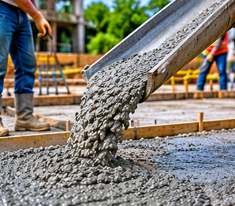
Step 5: Place the PCC
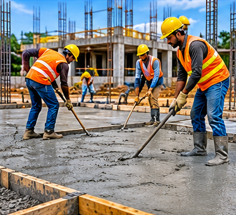
The concrete is placed evenly within the prepared area and spread to the required thickness.
Step 6: Level and Finish the Surface
The surface is levelled and finished according to the intended use. For blinding applications, a suitable finish should support the next stage of work.
Step 7: Cure the Concrete
Concrete requires appropriate curing to support cement hydration and strength development. Follow the project specifications and the construction professional’s instructions for the curing method and duration.
Step 8: Inspect Before the Next Stage
Before proceeding, verify the surface level, thickness, condition, and other relevant requirements. Any defects should be assessed and corrected as appropriate.
8. Important Precautions While Using PCC
Although PCC is a relatively straightforward construction material, poor workmanship can affect the quality of the work that follows.
Keep these points in mind:
- Use materials that meet the required quality specifications.
- Prepare and compact the base as specified.
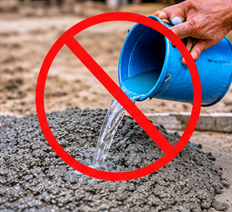
- Avoid adding excessive water to improve workability.
- Maintain the specified concrete thickness and levels.
- Ensure uniform placement and appropriate finishing.
- Protect fresh concrete from conditions that could damage it.
- Carry out curing as required.
- Do not cover defective work without inspection and approval.
For foundation applications, PCC thickness and extent should be based on the approved drawings and project specifications rather than assumptions.

9. Common Mistakes to Avoid During PCC Work
Using an Incorrect Mix
An unsuitable mix can compromise the required performance. Follow the specified mix and batching procedures.
Ignoring Ground Preparation
Placing PCC over loose or unsuitable soil can lead to an uneven base and affect subsequent work.
Adding Too Much Water
Excess water can negatively affect concrete properties. The mix should achieve suitable workability without compromising its specified performance.
Neglecting Curing
Fresh concrete needs suitable curing conditions for strength development and durability.
Starting the Next Stage Without Inspection
The PCC layer should be checked before the next construction activity begins, especially where its level and condition affect foundation work.
Treating PCC as a Structural Foundation
PCC is not a replacement for a foundation designed to carry the building loads. Structural foundation design must be handled by qualified professionals.
10. Why Is PCC Important for Quality House Construction?
The quality of a house depends on both major structural components and the smaller construction stages that support them.
PCC helps create suitable working conditions for foundation-related activities and other applications where a plain concrete base is required.
When correctly specified and installed, it contributes to:
- Better site preparation.
- More accurate levels and dimensions.
- Cleaner foundation work.
- Improved coordination between construction stages.
- More consistent workmanship.
At Divine House, careful planning, appropriate material selection, and attention to construction details are important parts of delivering quality homes. Every stage, from ground preparation to finishing, should be completed according to the project specifications and under suitable technical supervision.
Conclusion
PCC, or Plain Cement Concrete, is an important material in many construction projects. It is commonly used below foundations as a blinding layer, for levelling, and in other applications where a plain concrete base is appropriate.
Its key benefits include providing a clean working surface, supporting accurate construction, and helping prepare the site for subsequent activities.
However, the quality of PCC depends on proper ground preparation, correct mix selection, suitable placement, and adequate curing. Most importantly, PCC and RCC have different functions and should be used according to the project’s engineering requirements
Frequently Asked Questions
1. What does PCC stand for in construction?
PCC stands for Plain Cement Concrete. It is concrete generally made without steel reinforcement and is commonly used for blinding, levelling, and other suitable non-reinforced applications.
2. Why is PCC used below foundations?
PCC provides a clean, level working surface below foundation elements where specified. It helps facilitate marking, reinforcement placement, and other foundation-related activities.
3. What is the common PCC mix ratio?
A nominal mix such as 1:4:8 is sometimes used for lean PCC applications, depending on project specifications. The correct mix must be selected according to the required performance and intended use.
4. What is the difference between PCC and RCC?
PCC generally does not contain steel reinforcement and is used for suitable base and non-reinforced applications. RCC contains designed steel reinforcement and is commonly used for structural elements such as beams, columns, and slabs.
5. Is PCC necessary for every house foundation?
Not necessarily. The requirement for PCC depends on the foundation design, site conditions, soil characteristics, and project specifications. Follow the approved drawings and the advice of the responsible engineer.
6. How thick should PCC be below a foundation?
There is no single thickness suitable for every project. The required thickness depends on the foundation design, site conditions, and construction specifications.
7. Does PCC require curing?
Yes. PCC should receive appropriate curing to support cement hydration and strength development. The curing method and duration should follow the project requirements.
8. Can PCC be used instead of RCC?
No, not where reinforced concrete is required by the structural design. PCC and RCC serve different purposes, and substituting one for the other without engineering approval can compromise structural safety.
9. What materials are used to make PCC?
PCC generally contains cement, fine aggregate, coarse aggregate, and water. Material quality and mix proportions should comply with the project specifications.
10. Does PCC increase house construction cost?
PCC adds to the construction cost, but it may be necessary for the specified application. Its cost depends on the quantity, thickness, mix, materials, labour, and site conditions. It should be assessed as part of the overall construction plan.