Diwali is a festival of light, prosperity, and new beginnings. It is a time when families clean their homes, decorate their entrances, light diyas, and create welcoming spaces for celebrations. For many homeowners, Diwali is also an opportunity to refresh their interiors and bring traditional Vastu Shastra principles into their living spaces.
Vastu Shastra is a traditional Indian system of architecture that considers directions, spatial arrangements, natural light, ventilation, and the use of space. Many families follow Vastu-inspired practices when designing or decorating their homes, especially during festive occasions.
Whether you are decorating your existing home or planning a new house, thoughtful choices involving the entrance, lighting, colours, and room arrangement can help create a comfortable and visually balanced environment.
In this guide, we explore practical Vastu-inspired home tips for Diwali, along with modern design and construction considerations to help you prepare a beautiful home for the festive season.
https://youtube.com/@divinehouseofficial?si=jRtAqIuH0LOI4BRc
1. Keep Your Home Entrance Clean and Welcoming
In Vastu traditions, the main entrance is often considered an important part of the home because it serves as the primary point of entry. During Diwali, decorating this area can create a festive first impression.
Consider these simple ideas:
- Keep the entrance clean, uncluttered, and well maintained.
- Decorate the doorway with a traditional toran, fresh flowers, or mango leaves.
- Create a rangoli using traditional patterns or flower petals.
- Add suitable lighting to improve visibility and highlight the entrance.
- Ensure that the main door opens and closes smoothly without obstruction.
- Keep footwear, storage items, and decorative objects arranged neatly.
Some Vastu traditions associate particular entrance directions with positive outcomes. Interpretations vary, so if directional placement is important to your family, consult a knowledgeable Vastu practitioner while also considering the plot, building regulations, and practical requirements.
Construction tip: If you are planning a new home, consider the entrance location, privacy, natural lighting, weather protection, and convenient access during the architectural design stage.
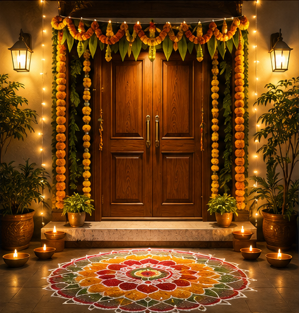
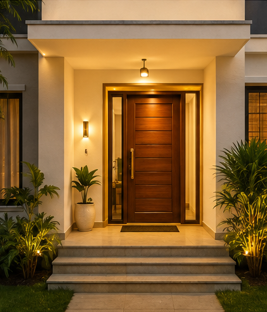
2. Choose Suitable Colours for Your Entrance
Colours influence the visual character of a home. During Diwali, using a coordinated palette can make the entrance feel bright, elegant, and inviting.
Here are some popular options:
- White and cream: Create a clean, calm, and timeless appearance.
- Light yellow: Adds warmth and brightness.
- Soft peach: Creates a welcoming atmosphere.
- Earthy beige: Complements natural materials and traditional decor.
- Green accents: Add a fresh touch when paired with plants or floral decorations.
In Vastu-inspired design, certain colours may be associated with particular directions or spaces. These recommendations differ across traditions and practitioners, so they are best treated as cultural design preferences rather than universal rules.
Choose colours that complement your flooring, door finish, exterior walls, and surrounding architecture.
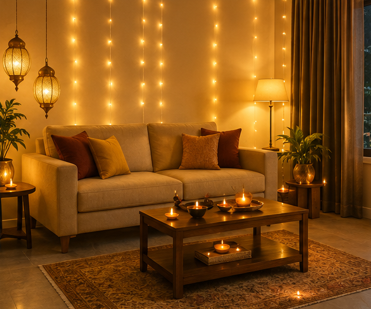
3. Use Lighting to Create a Positive Festive Atmosphere
Lighting is one of the most recognisable features of Diwali. Diyas, lanterns, decorative string lights, and warm interior lighting can transform the atmosphere of a home.
Vastu-inspired home decoration often emphasises brightness and well-maintained spaces. Good lighting also serves practical purposes by improving visibility, comfort, and the appearance of interiors.
Try these ideas:
- Place diyas on stable, heat-resistant surfaces.
- Use warm-white lights in living rooms and selected relaxation areas.
- Illuminate dark corners with suitable fixtures.
- Highlight the entrance, pooja area, or decorative wall with soft lighting.
- Use energy-efficient LED lights for festive decorations.
- Switch off decorative lights when they are not required.
Avoid overloading sockets or using damaged cables. Keep open flames away from curtains, paper decorations, wooden surfaces, and other combustible materials. Never leave burning diyas unattended.
Construction tip: Plan lighting points, switches, and electrical circuits before construction and finishing work. This makes it easier to achieve a balanced lighting layout without unnecessary wiring changes later.
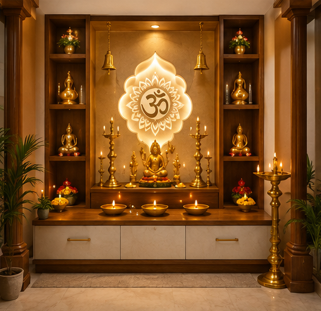
4. Create a Calm and Well-Organised Pooja Space
The pooja area is an important part of many Indian homes, particularly during Diwali prayers and celebrations. A clean and thoughtfully arranged space can support a peaceful atmosphere.
Consider the following tips:
- Keep the pooja area clean and free from unnecessary clutter.
- Use soft, warm lighting to highlight the space.
- Arrange prayer essentials on dedicated shelves or storage units.
- Add fresh flowers and simple festive decorations.
- Choose easy-to-clean surfaces and finishes.
- Ensure adequate ventilation and safe clearance around lamps and diyas.
Some Vastu traditions recommend specific locations or orientations for a pooja room. If you wish to follow such preferences, discuss them during the planning stage so they can be balanced with the available floor area, ventilation, circulation, and other design requirements.
For a new house, planning the pooja area early can help coordinate storage, lighting, electrical points, and interior finishes.
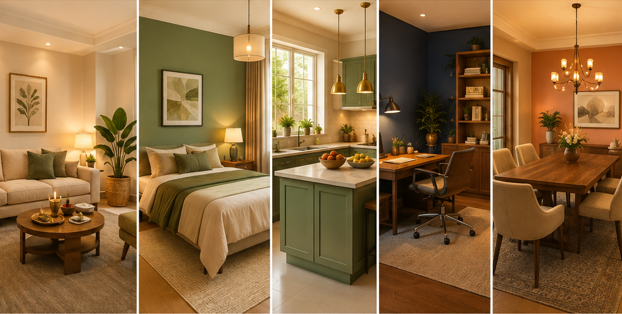
5. Select Vastu-Inspired Colours for Different Rooms
The colours used in a home can affect its visual balance, perceived brightness, and overall atmosphere. During Diwali, small changes to textiles, accessories, and decorative items can refresh a room without requiring a complete renovation.
Living room
Light beige, cream, soft yellow, and warm neutral shades can make the living room feel bright and welcoming. Pair them with comfortable seating, warm lighting, and a few festive accents.
Bedroom
Soft blue, muted green, warm beige, and other gentle shades can create a restful visual environment. Avoid excessive decoration that makes the room feel crowded.
Kitchen
Cream, light yellow, and selected earthy shades can create a bright, clean appearance. Choose practical finishes that are easy to maintain.
Study or home office
Soft neutral shades, muted green, and light blue can create a calm setting. Ensure the space also has adequate task lighting and an ergonomic layout.
Pooja room
White, cream, light yellow, and natural wood finishes can create a simple and serene appearance.
Vastu colour recommendations vary by direction and tradition. Use them as inspiration while considering room function, daylight, personal preferences, and the colours already present in your home.
6. Make the Most of Natural Light and Ventilation
Natural light and fresh air are important considerations in comfortable home design. Many Vastu-inspired approaches also value bright, airy spaces.
You can improve the use of natural light by:
- Keeping windows clean and unobstructed.
- Choosing curtains that allow daylight to enter when privacy permits.
- Avoiding bulky furniture that blocks windows.
- Using lighter wall colours in rooms with limited daylight.
- Keeping ventilation openings clear.
- Arranging furniture to support comfortable movement.
If you are planning a new home, window placement should be based on the plot orientation, climate, privacy, ventilation needs, and building design. A qualified architect can help balance these factors.
Natural light can reduce the need for artificial lighting during the day, while suitable ventilation can improve indoor comfort.
7. Keep the Living Room Clutter-Free
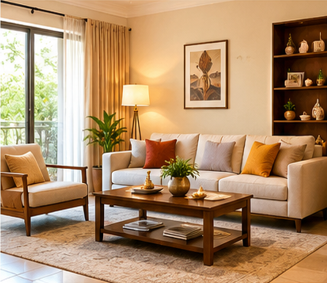
During Diwali, homes often contain extra decorations, gifts, sweets, and items for entertaining guests. Organising the living room can make celebrations more comfortable.
Try these practical steps:
- Keep the main walking routes clear.
- Arrange furniture to support easy movement.
- Use storage baskets or cabinets for small items.
- Avoid blocking windows and doorways.
- Display a few meaningful decorative objects instead of overcrowding surfaces.
- Place lamps and candles where they cannot be easily knocked over.
Some Vastu practices recommend specific furniture arrangements or room orientations. However, safe circulation, accessibility, comfort, and the actual dimensions of the room should remain important considerations.
8. Add Plants and Natural Decorative Elements
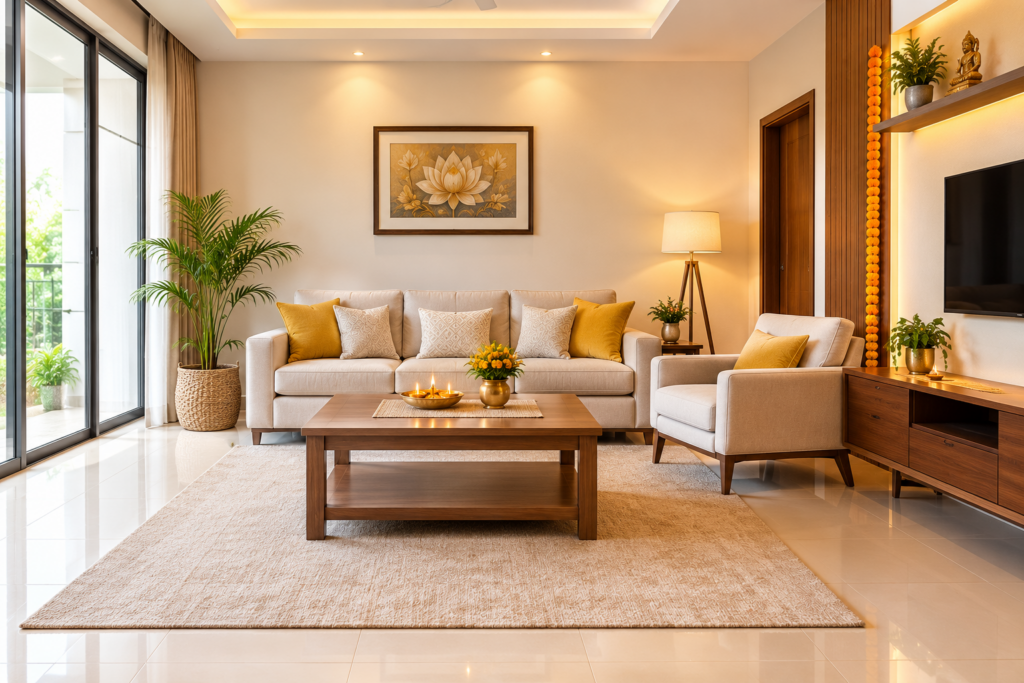
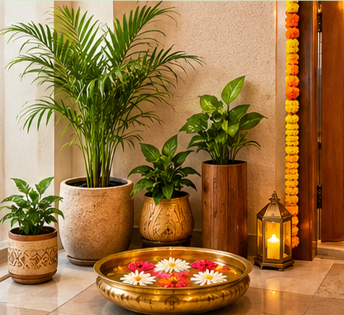
Plants, flowers, and natural materials can introduce freshness and texture into festive interiors.
For Diwali, consider:
- Fresh marigold or other seasonal flowers.
- Healthy indoor plants suited to the available light.
- Natural wood decorative elements.
- Flower arrangements near the entrance or living area.
- Reusable fabric decorations and natural-fibre accessories.
Choose plants according to their light, watering, and maintenance requirements. Avoid blocking passages or placing pots where water can damage electrical fittings or flooring.
Certain plants are traditionally associated with auspiciousness in Indian homes. If you wish to include them for cultural reasons, choose suitable locations based on the plant’s needs and the practical layout of your home.
9. Follow Practical Vastu-Inspired Tips for the Kitchen
The kitchen is an essential part of home planning. During Diwali, it may also be one of the busiest spaces because of festive cooking and hosting.
To prepare your kitchen:
- Keep worktops clean and organised.
- Arrange frequently used utensils and ingredients within easy reach.
- Ensure adequate task lighting over preparation areas.
- Maintain ventilation around cooking appliances.
- Keep the stove area clear of unnecessary decorations.
- Store cleaning materials safely.
- Check that electrical appliances and connections are in good condition.
Traditional Vastu guidance may suggest preferred kitchen locations or stove orientations. If these are priorities for your household, discuss them with your architect while ensuring that the final layout meets ventilation, fire safety, plumbing, and ergonomic requirements.
10. Plan Your Home Design with Vastu Considerations in Mind
If you are building a new house, it is generally easier to consider Vastu preferences during the design stage than to make major changes after construction.
Before finalising the plans, prepare a list of your priorities, including:
- Preferred main entrance direction.
- Pooja room location.
- Kitchen and bedroom arrangements.
- Window placement and natural ventilation.
- Staircase and circulation requirements.
- Electrical and plumbing layouts.
- Storage, parking, and future expansion needs.
Share these requirements with your architect and construction team early. They can help assess what is practical for your plot, proposed building, and applicable regulations.
Vastu is a traditional belief system rather than a scientifically established guarantee of health, prosperity, or success. Its principles can be incorporated as cultural or personal preferences while giving appropriate attention to structural safety, functionality, accessibility, and building requirements.
11. Avoid Common Home Decoration Mistakes During Diwali
Festive decorations should enhance your home without making it uncomfortable or unsafe.
Avoid these common mistakes:
- Using too many colours without a coordinated palette.
- Blocking windows with large decorative displays.
- Placing diyas near curtains or other flammable materials.
- Overloading electrical sockets with decorative lights.
- Covering ventilation openings with decorations.
- Crowding the entrance with furniture, plants, or storage.
- Choosing decorative materials that are difficult to clean.
- Making major construction changes based only on temporary festive needs.
Conclusion: Welcome Diwali with a Thoughtfully Designed Home
Diwali is a time to celebrate light, happiness, and new beginnings. Vastu-inspired decoration can be a meaningful way to honour tradition while refreshing your home’s appearance.
From maintaining a welcoming entrance and choosing harmonious colours to planning suitable lighting, improving ventilation, and organising your living spaces, small improvements can make your home feel more comfortable and festive.
If you are building a new house, consider your Vastu preferences early so they can be evaluated alongside practical design, safety, and construction needs.
This Diwali, create a home that reflects your traditions, supports your lifestyle, and welcomes every new beginning.
Divine House – Building Your Dream.
Frequently Asked Questions
1. What are the main Vastu tips for Diwali?
Common Vastu-inspired practices include keeping the entrance clean, maintaining bright and organised rooms, decorating the pooja area, and using suitable colours and lighting. Recommendations vary by tradition.
2. Which direction is considered best for a home’s main entrance according to Vastu?
Some Vastu traditions favour particular entrance directions, but recommendations vary. The best practical design also depends on the plot, local regulations, climate, access, and architectural layout.
3. Which colours are considered good for a home according to Vastu?
Light yellow, white, cream, beige, and selected soft colours are commonly used in Vastu-inspired interiors. Room function, daylight, personal preferences, and the overall design should also guide colour selection.
4. How should I decorate my entrance for Diwali?
Keep it clean, add a toran or flowers, create a rangoli, and use suitable decorative lighting. Ensure the doorway and walking path remain clear.
5. What type of lighting is suitable for a Vastu-inspired home?
Natural daylight and well-planned artificial lighting can make a home bright and comfortable. Warm-white lights are often used in living spaces, while task areas need sufficient functional illumination.
6. Where should I place diyas during Diwali?
Place diyas on stable, heat-resistant surfaces away from curtains, decorations, children, pets, and electrical fittings. Never leave an open flame unattended.
7. Can Vastu be considered during house construction?
Yes. If Vastu preferences are important to your family, discuss them with your architect during the initial planning stage so they can be evaluated alongside structural design, functionality, and applicable regulations.
8. Does Vastu guarantee prosperity or good health?
No. Vastu is a traditional architectural belief system, and there is no established scientific evidence that following it guarantees prosperity or health. Good ventilation, safe construction, hygiene, and functional design have practical benefits.
9. How can I make my home feel more positive during Diwali?
Clean and organise your rooms, improve lighting, add flowers, use a coordinated colour palette, and create comfortable spaces for prayer and family gatherings.